
The Pause Between Sprints Is Where the Product Gets Real
AI makes building effortless — and sales avoidance invisible. Here's how technical founders recognize the trap and break out of it.

Technical Founders are Product Managers by default in the early days of a Product Development Cycle. They love defining the roadmap. They love the craft of the feature. And for a long time, that instinct was the right one — because the old constraint was always what to build, not how fast you could build it.
The old loop made sense: talk to customers, figure out what needs to exist, build it carefully. There was a natural forcing function — building took long enough that you had to be selective. Talking to users wasn’t just good practice, it was economically necessary.
That constraint is gone. Building is now absurdly fast. If you think a feature might be useful, it’s often quicker to build a rough version and show it than to explain it conceptually. That’s genuinely powerful — real demos get real reactions. You can run feedback cycles in days that used to take months.
“The speed of building keeps falling. The cost of not selling stays exactly the same.”
But here’s where the trap opens up: when building is effortless, the decision to build one more feature stops feeling like a trade-off. It starts feeling like progress. And for technical founders who are quietly uncomfortable with sales - “one more feature” becomes the world’s most productive-feeling form of avoidance. It has always been harder to get paying customers than bring a product to market.
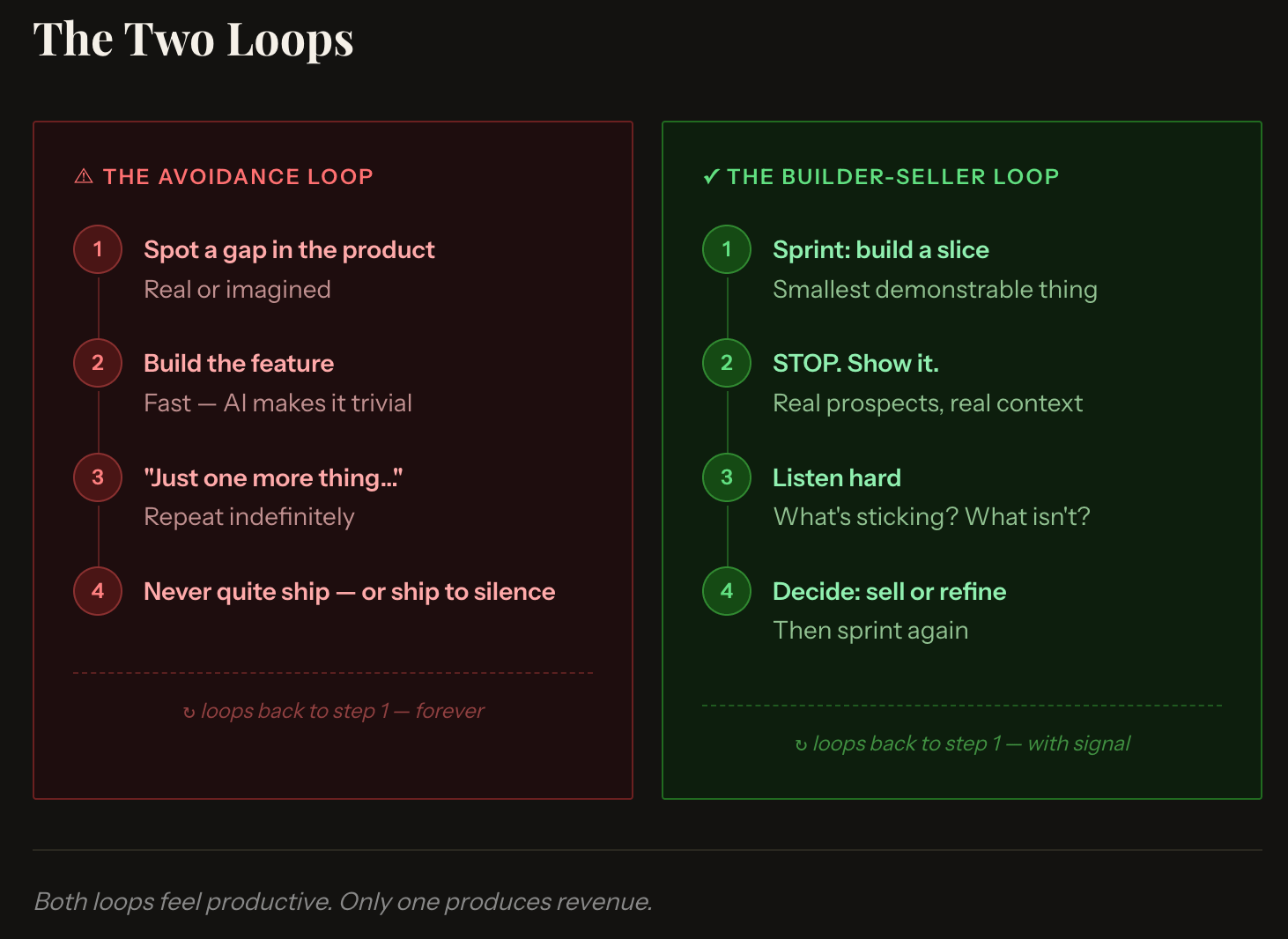
How to Know You’re in the Wrong Loop
The avoidance loop is seductive because it produces visible output. You shipped something. The codebase grew. The product is more capable than it was yesterday. These feel like leading indicators of success — when they’re actually lagging indicators of discomfort with selling.
The tell isn’t what you built. It’s what you didn’t do instead. Did you call three prospects this week? Did you run a structured demo and ask for a commitment at the end? Did you hear “no” from someone who actually understood what you were selling? If not — and you shipped anyway — you’re probably in the wrong loop.
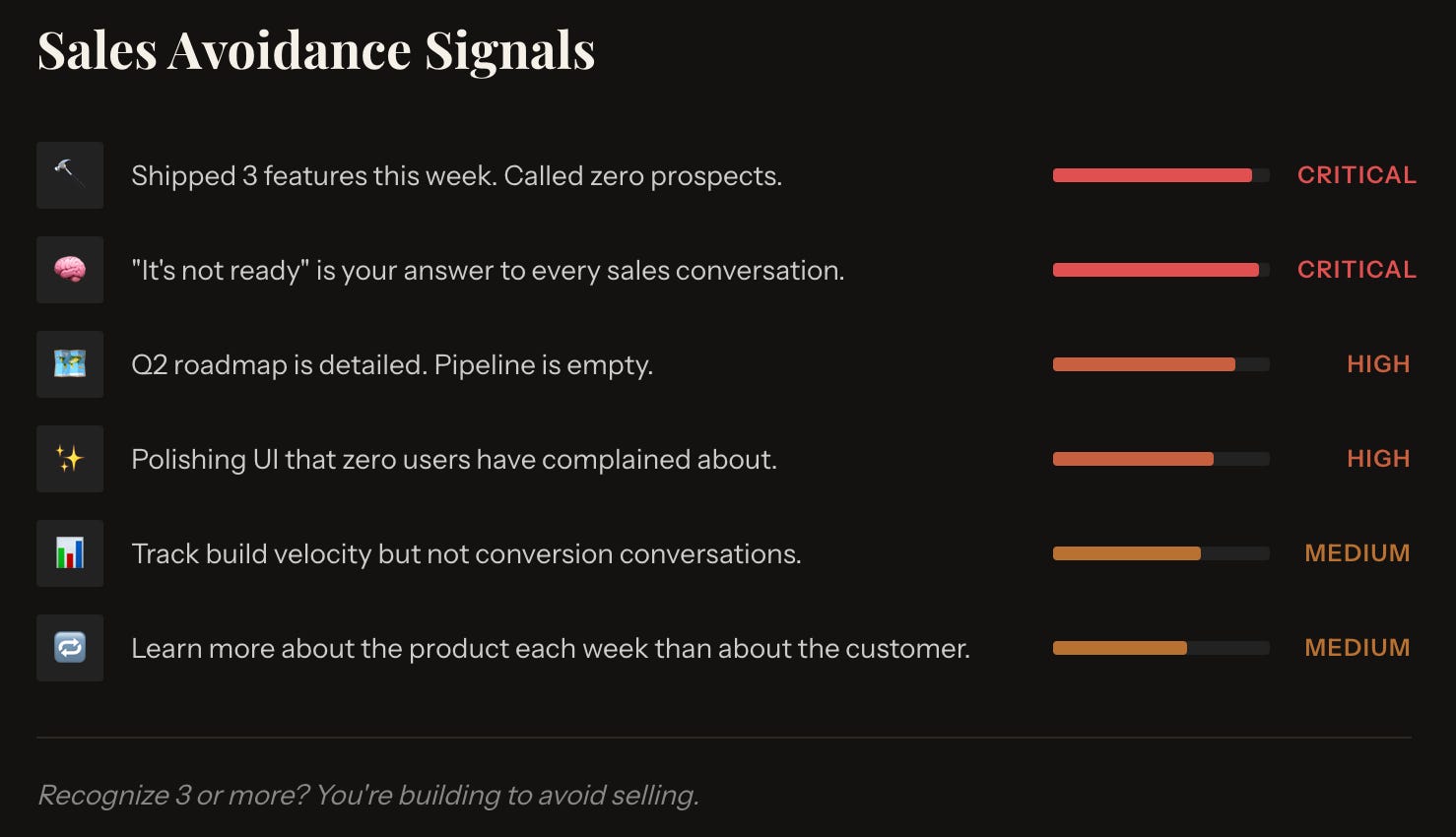
The Pause Is the Practice
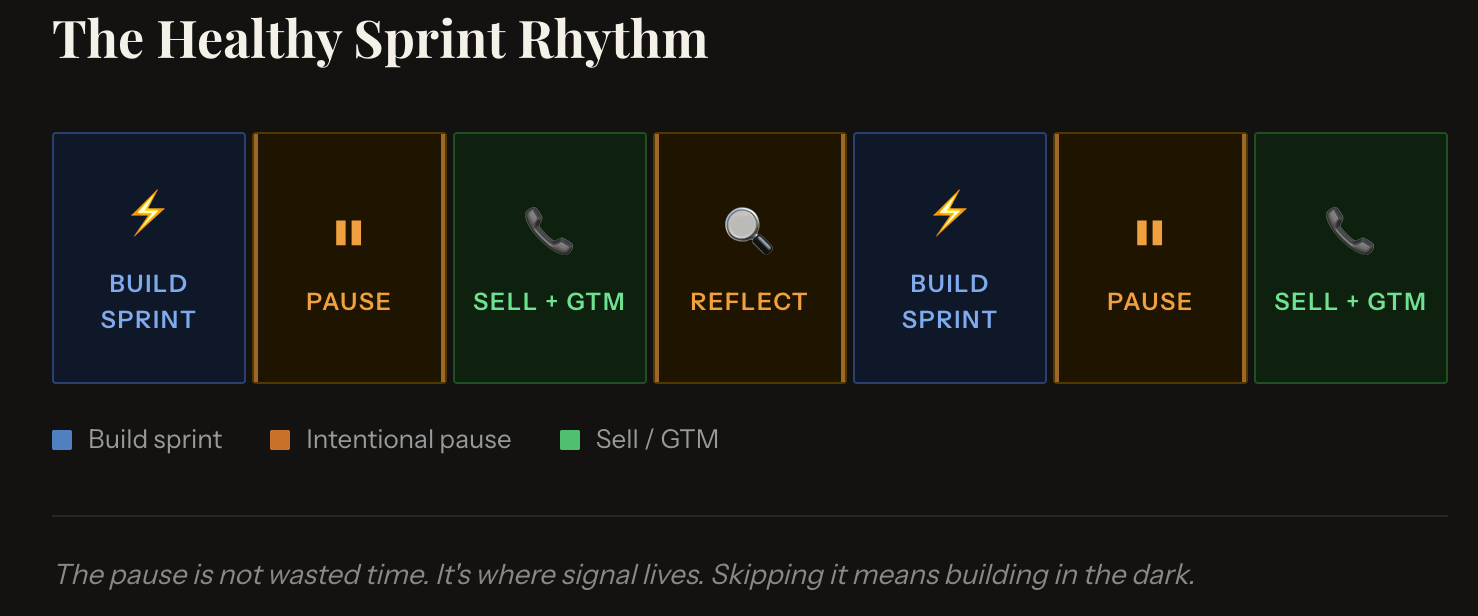
The fix isn’t to stop building. Building is the advantage. The fix is to make the pause between sprints a non-negotiable discipline — not a nice-to-have when things feel ready.
After every meaningful build sprint, stop. Deliberately. Engage the market — not with a polished pitch deck, but with a working demo and honest questions. Sit with what you hear. Figure out what’s landing and what isn’t. Only then go back to the keyboard.
The pause isn’t downtime. It’s the highest-leverage work a founder can do. It converts your build effort into signal. Without it, you’re just accumulating features with no evidence of fit.
What “Complete” Actually Means
Here’s a useful reframe: a product is never complete in the abstract. A product is complete when it drives adoption. That’s the only meaningful definition of done.
Until users are actually using the thing — not reacting to demos, not giving polite feedback, but logging in, running workflows, integrating it into their day — you don’t know what to build next. You’re optimizing a hypothesis.
Adoption is when the real feedback arrives. The bugs that matter. The use cases you didn’t anticipate. The language users reach for when they describe the problem. That’s the input for your next sprint. Everything before adoption is informed guessing.
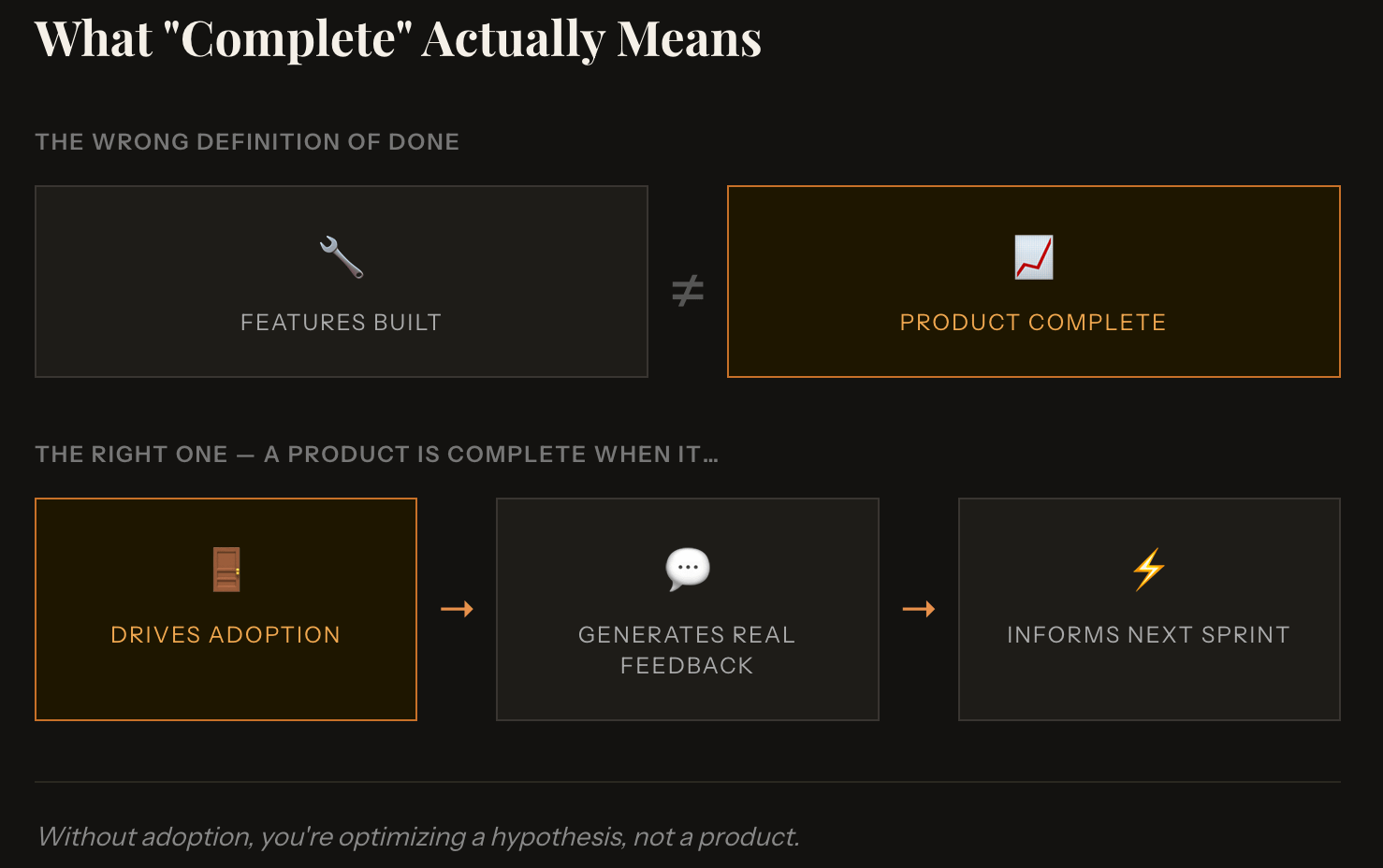
A product is complete when it: → Drives adoption → Generates real feedback → Informs the next sprint
So: build fast, yes. Use the speed. Show real things instead of decks. But treat each sprint as a question, not an answer. The question is always some version of: is this the thing people will actually pay for and use?
Selling is how you find out. GTM is how you scale the answer. Distribution isn’t what happens after the product is done — it’s the feedback mechanism that tells you when the product is done.
One more feature won’t tell you that. A signed contract will.